How to install Solar Mosaic Disk Lights in a garden?
 Jordan HaleStaff Writer
July 7, 2026 — Installing Solar Mosaic Disk Lights requires choosing a location with at least six hours of direct sunlight and ensuring the ground is sufficiently softened to prevent stake damage.
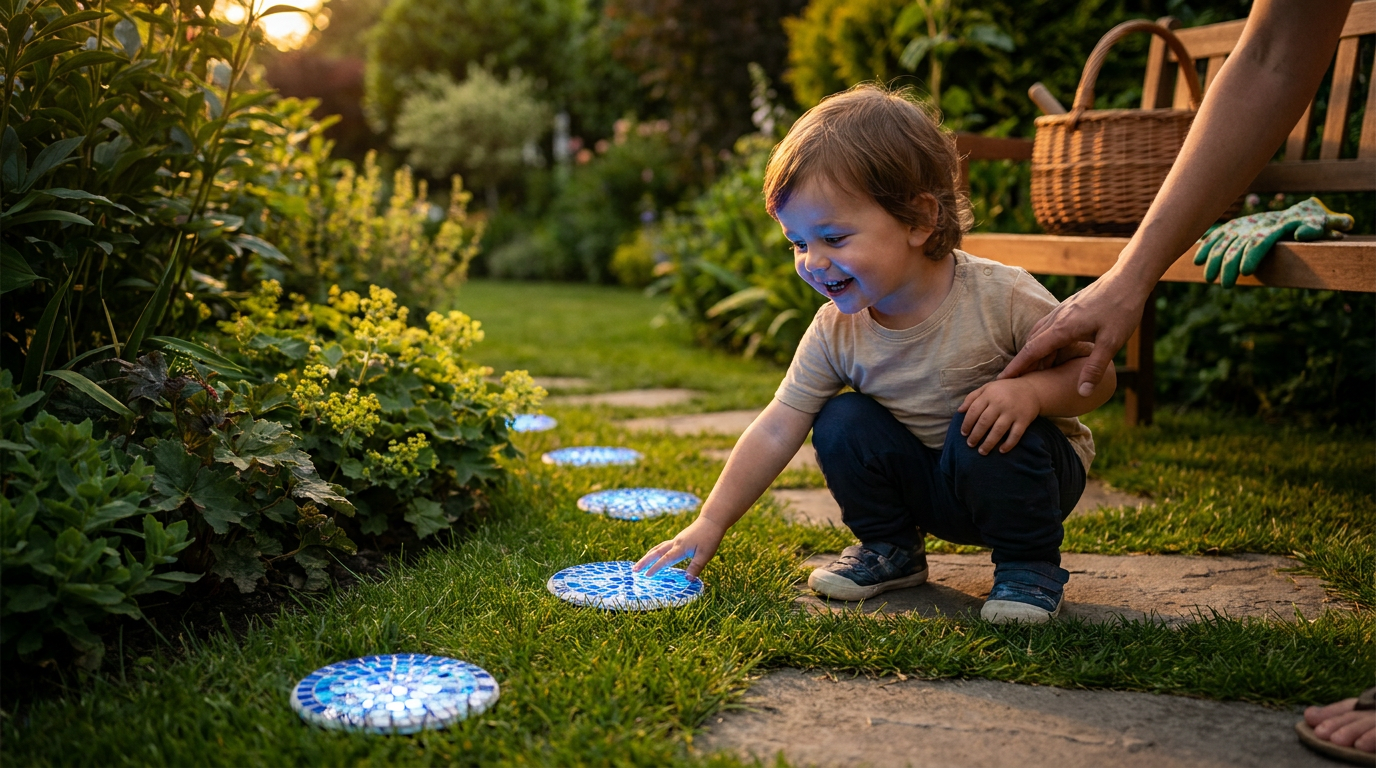
The first thing I noticed was the weight of the glass. Holding a Solar Mosaic Disk Light feels different than the hollow plastic alternatives; there is a density to the mosaic tiles that suggests they are meant to stay exactly where you put them. Homeowners often ask how to properly integrate these into a yard because, unlike traditional spotlights, these sit flush against the earth, creating a pool of fractured color rather than a harsh beam. I spent an afternoon pressing these into the loam along my gravel path, watching how the light caught the setting sun even before the LEDs kicked in.
Where should Solar Mosaic Disk Lights be placed for best results?
Solar Mosaic Disk Lights should be placed in open areas free from overhead obstructions like deep eaves or dense foliage to ensure the internal photovoltaic cells receive maximum UV exposure. Somewhere around week two, I realized that even partial shade from a large hosta leaf could significantly reduce the nighttime runtime of the internal battery. According to BLACK+DECKER, decorative solar lights are designed to add a stylish atmosphere, but their performance is tethered to the quality of assembly and placement in sunny zones. To get that signature stained-glass glow, I found that placing them approximately three feet apart creates a continuous visual rhythm along a walkway without overcrowding the landscape.
How do you secure Solar Mosaic Disk Lights in hard soil?

Photo by Jimmy Liao on Pexels
To secure these lights in compacted soil, you must pre-moisten the ground or use a trowel to create a pilot hole rather than forcing the reinforced stakes downward. It turns out that even the sturdiest ground spikes can stress if they hit a hidden rock or sun-baked clay. I keep coming back to the importance of soil preparation; a quick soak with a garden hose ten minutes before installation makes the process effortless. While some products, like Gigalumi Solar Ground Lights, are noted for their ease of use in various reviews, the specific mosaic housing of our units benefits from a level, stable base to prevent the glass from becoming obscured by mud splatter during heavy rains.
Quick answers
Q: How many hours of light do Solar Mosaic Disk Lights provide? / A: When the internal battery is fully charged by 6-8 hours of direct sunlight, the lights typically stay illuminated for up to 10 hours throughout the night.
Q: Can Solar Mosaic Disk Lights withstand lawn mowers? / A: While the low-profile design allows most mowers to pass over them if installed completely flush, it is recommended to maintain a 1-inch clearance to avoid scratching the decorative glass surface.
Q: Are Solar Mosaic Disk Lights waterproof? / A: Yes, they feature an IP65 or equivalent weather-resistance rating, which protects the internal circuitry from rain, snow, and irrigation systems.
Q: Do I need to replace the bulbs in these units? / A: No, these units use integrated LEDs that are rated for approximately 50,000 hours of use and are not designed to be user-replaced.
For more advanced aesthetic tips, see our guide on Solar Mosaic Disk Lights for Landscape Design or read about our Field Testing Solar Mosaic Disk Lights Stained Glass Design to see how they hold up in the elements. If you are still deciding on your aesthetic, consider Why choose Solar Mosaic Disk Lights for stained glass art? to understand the unique refractive properties of these fixtures.
Learn more about Solar Mosaic Disk Lights at https://solarmosaicdisklights.com.
Sources