Why choose solar flat garden lights mosaic glass styles?
 Jordan HaleStaff Writer
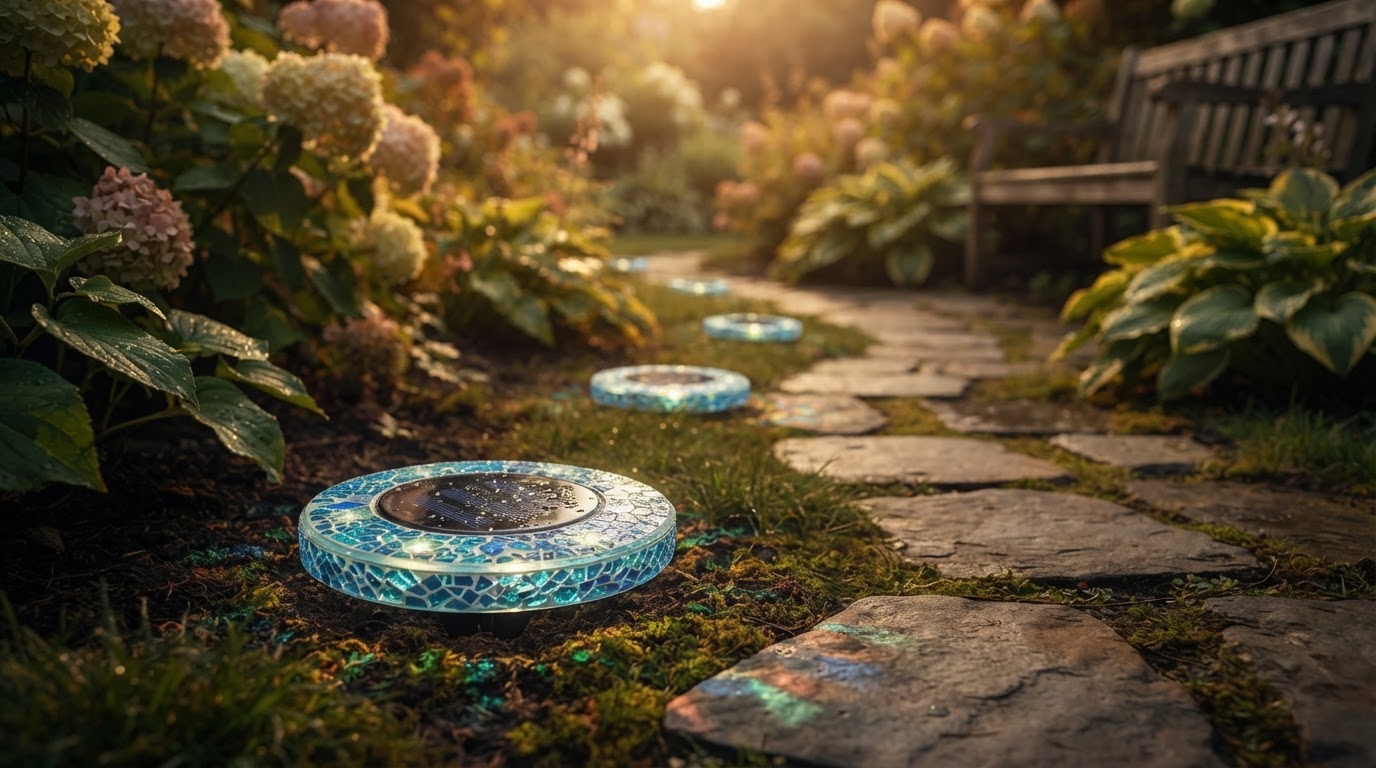
July 30, 2026 — Solar flat garden lights mosaic glass designs provide a weather-resistant, low-profile lighting solution that utilizes fragmented stained glass to diffuse LED light into colorful patterns. Homeowners often seek these out because they bridge the gap between functional safety lighting and intentional garden art. The light doesn't just point upward, but bleeds through the glass, staining the surroundings in shades of cobalt and amber.
How do mosaic glass solar disks handle outdoor exposure?
Solar mosaic disk lights are engineered to remain flush with the ground while protecting the internal LED and battery from moisture through sealed glass-to-base construction. The flat profile prevents the tripping hazards often associated with traditional stake lights. According to product details from LightInTheBox, these mosaic solar garden lights are designed to be affordable while maintaining durability for seasonal use.
Unlike taller fixtures that catch the wind, these remain anchored and continued to glow through the dampness during rainy periods. The mosaic fragments are typically embedded in a weather-hardened resin or grout that prevents the glass pieces from shifting during temperature fluctuations. Flat-profile lights do ask for a different maintenance glance than stake lights, because their failure mode is burial rather than breakage. A disk that sits flush with the soil is one growing season away from sitting below it: mulch migrates, soil settles and splashes, grass creeps, and autumn drops a leaf blanket that a stake light shrugs off but a ground-level panel wears like a blackout curtain. The fix is a monthly ten-second pass per disk — brush the surface, confirm the panel edge still stands slightly proud of its surroundings, and lift-and-relevel any unit the ground has started to swallow. In frost climates, spring is the mandatory check: freeze-thaw cycles heave shallow objects, and a disk tilted ten degrees by February charges noticeably worse in March. Setting each disk on a shallow bed of compacted sand or fine gravel at install time slows all of this considerably — it drains water away from the housing and gives the unit a firmer footing than raw soil ever does.
What makes mosaic patterns effective for landscape lighting?
Photo by Constantine Kim on Pexels
Mosaic patterns transform a standard white LED beam into a multi-tonal light display that adds texture to patios or walkways. The geometry of fragmented glass allows for a wider dispersion of light compared to clear plastic lenses, which can appear harsh. As noted by eBay listings for solar outdoor lights garden decor, the mosaic glass globe design is intended to look fabulous even when the light is off, functioning as a decorative stone during daylight hours.
The internal light source hits the edges of the stained glass, creating a kaleidoscope effect that simple solar disks cannot replicate. This diffusion is useful for illuminating decorative solar disk lights for yard without creating the glare that often interferes with night vision in dark gardens. The stained-glass palette is a design input worth choosing deliberately rather than defaulting on. Cobalt and violet mosaics read cool and moonlit — at home among silver foliage, white blooms, and modern hardscape — while amber and red fragments throw a firelight warmth that flatters terracotta, cedar, and cottage plantings; a mixed-color disk splits the difference and pairs with almost anything, at the cost of a busier effect. The other pairing decision is functional: mosaic disks are ambiance, not task lighting, and gardens that rely on them alone leave steps and thresholds underserved. The combination that works keeps plain warm-white fixtures on the safety jobs — stairs, door landings, grade changes — and lets the mosaic pieces do the decorating between them, where their colored glow invites the eye without needing to guide a foot.
One genuinely underrated placement: anywhere viewed from above. Because a flat disk throws its kaleidoscope pattern upward, a cluster visible from a deck, balcony, or second-floor window performs its whole show for that vantage point — something no upward-shining stake light offers.
Quick answers
Q: Are these lights safe for lawnmower traffic? A: While Solar Mosaic Disk Lights have a low profile, they should be placed in flower beds or along borders rather than directly in the path of a mower blade to avoid cracking the 4-inch glass surface.
Q: How long do the mosaic colors last in direct sunlight? A: The stained glass used in these fixtures is UV-stable, meaning the blues and reds will not fade over a 12-month period of high-intensity sun exposure.
Q: Can you customize the mosaic pattern yourself? A: While retail units come pre-assembled, YouTube tutorials by creators like Garden Art demonstrate how to mosaic a solar garden light using glass, beads, and paint for a bespoke look.
Effective placement is essential for optimizing outdoor spaces with solar mosaic disk lights to ensure the solar panels receive at least 6 hours of direct light.
Learn more about Solar Mosaic Disk Lights at https://solarmosaicdisklights.com.
Layout patterns that flatter a flat light
Spacing discipline is what separates a designed installation from a scattering. Along a path, disks every four to six feet establish a rhythm the eye follows naturally; closer than three feet and the colored pools merge into clutter, farther than eight and each disk reads as a stranded ornament. Odd numbers help everywhere the layout is visible as a group — threes and fives beside a bench or at a bed corner compose themselves, while pairs and squares look like leftover hardware. The flat profile also unlocks placements stake lights cannot attempt: seated directly between pavers, inset along a gravel border, or dotted through a rock garden where anything vertical would fight the low profile of the planting.
Resist the perimeter-outline instinct — disks marching evenly around every bed edge produce an airstrip, not a garden. The stronger pattern concentrates them where evenings actually happen (around the patio, flanking the main path) and lets the garden's far corners stay dark by contrast, which is precisely what makes the lit areas feel intentional after dusk.