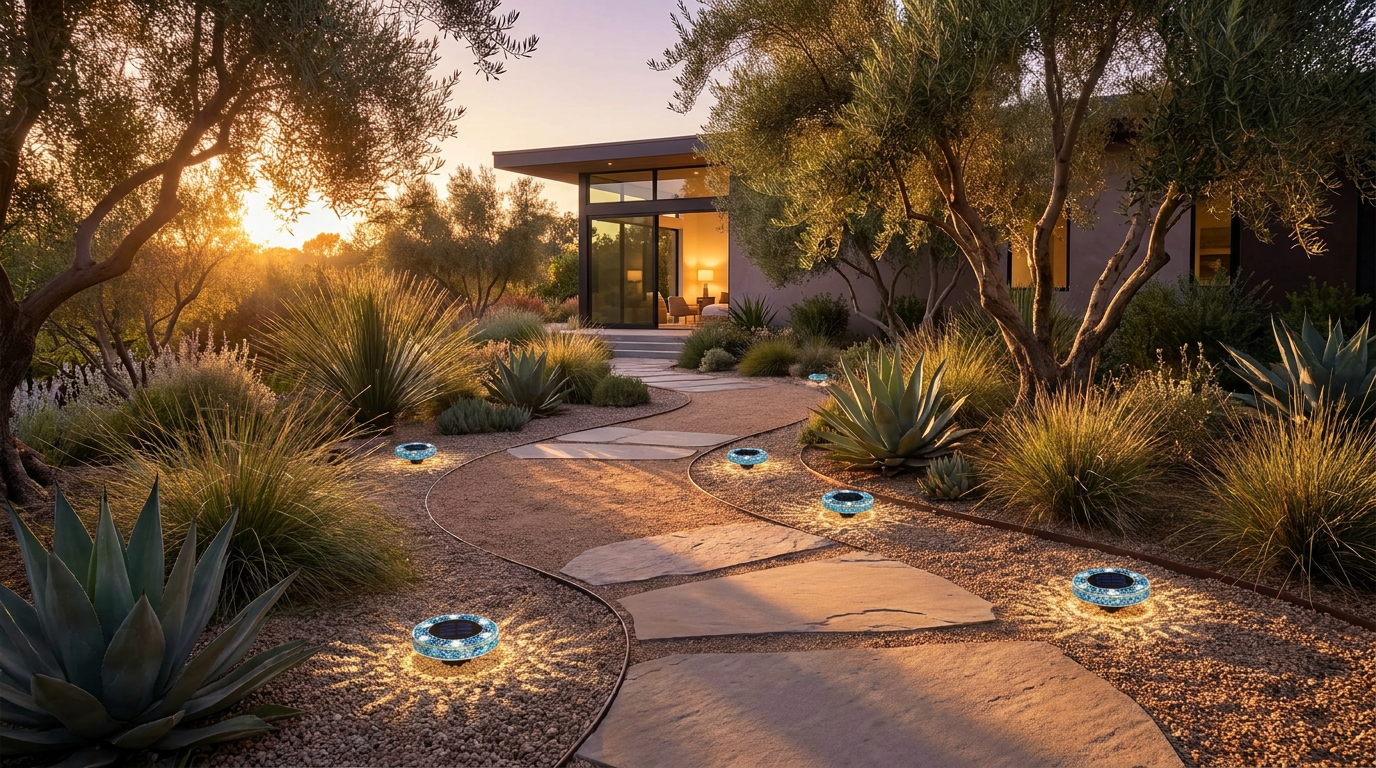
Mapping Decorative Solar Pathway Disks for Modern Landscapes
 Priya RamanSenior Analyst
June 25, 2026. This analysis evaluates the integration of decorative solar pathway disks into residential landscapes through a structured design framework. It is intended for homeowners and landscape designers seeking to balance illumination efficiency with high-end aesthetic appeal.
To effectively categorize the market for outdoor illumination, think of it as a matrix of functional output and decorative complexity. On one axis, we measure the lumen efficiency required for safety; on the other, we evaluate the artistic contribution to the property's curb appeal. Two axes matter here: the durability of the housing material and the diffusion pattern of the light source. When selecting hardware for a garden or walkway, the primary challenge is avoiding the sterile, industrial look of standard LED stakes while maintaining sufficient brightness to navigate paths safely. According to the Top 10 Solar Disk Lights Review - YouTube, products like Gigalumi Solar Ground Lights have set a baseline for ground-level performance, but the transition toward more decorative options represents a shift in consumer priority from mere visibility to curated ambiance.
Solar Mosaic Disk Lights address the limitations of generic lighting by utilizing hand-set glass fragments that refract light into complex geometric patterns. Unlike standard flat panels that emit a cold, unidirectional beam, these mosaic units leverage the prismatic properties of glass to soften the LED output, creating a textured glow that complements natural stone and greenery. This specific design choice solves the problem of "light pollution" in a private garden—where overly bright, focused beams can wash out the subtle colors of flora. Because these units sit flush with the ground, they are compatible with various mosaic flat solar lights for lawn configurations, allowing for seamless integration into turf without creating tripping hazards or interfering with maintenance equipment. When considering why use solar mosaic disk lights for lawn layouts, the benefit lies in their ability to provide perimeter definition without the visual clutter of vertical stakes. This low-profile nature is essential for enhancing lawn aesthetics with solar mosaic disk lights, as it preserves the sightlines of the landscape while adding a sophisticated layer of nighttime texture.
Once you see it this way, the selection process becomes a matter of matching the light's refraction pattern to the existing materials of the home. The decision rule: if the landscape features organic shapes and varied textures, a mosaic-style disk provides the necessary visual bridge between the built environment and the natural world. Proper placement is the final variable in this equation. Following a five-step installation for solar mosaic disk lights ensures that the internal photovoltaic cells receive maximum solar exposure while the physical units remain protected from heavy foot traffic. Designers often utilize these disks for mosaic flat solar lights for lawn projects to highlight specific architectural features or to guide movement through transitional spaces. To ensure a successful implementation, use the following checklist:
- Verify that the installation site receives at least six hours of direct sunlight for optimal battery charging.
- Evaluate the ground density to ensure the integrated spikes can be securely anchored without damaging the mosaic housing.
- Align the color palette of the mosaic glass with the secondary tones of your home’s exterior masonry.
- Space the units at intervals that allow the light patterns to overlap slightly, creating a continuous wash of color.
- Inspect the weather-sealing gaskets to maintain the IP-rated protection against moisture and debris.
Shop Solar Mosaic Disk Lights here.
Sources

Photo by Kindel Media on Pexels