Solar Mosaic Disk Lights for High-Traffic Garden Paths
 Maya ChenContributing Editor
September 10, 2026. This technical assessment evaluates the integration of Solar Mosaic Disk Lights within high-traffic residential landscapes. It is written for property owners prioritizing long-term structural durability over temporary aesthetic trends.
The Failure of Elevated Landscape Fixtures
The conventional wisdom says that elevated stake lights provide better coverage for garden paths, but this ignores the high failure rate caused by physical impact and environmental exposure. Traditional garden stakes frequently succumb to lawnmowers, pets, and wind-loading, resulting in a persistent cycle of replacement. According to Mosaic Solar Lights - Pinterest, the market is saturated with DIY solar crafts and candle-style lights that prioritize a "boho" look over engineering. While these may serve as temporary decor, they lack the ground-level stability required for permanent installations. Here's the part nobody talks about: elevated plastic housings are prone to UV degradation and structural shearing at the base. By moving the lighting element to a flush or low-profile disk format, the center of gravity is lowered, and the surface area exposed to lateral force is virtually eliminated. This shift in design philosophy moves lighting from a fragile accessory to a resilient architectural component. Homeowners seeking outdoor glass mosaic lighting often overlook the fact that a light's longevity is determined more by its profile than its lumen output. When lighting is recessed or kept low to the ground, it avoids the mechanical stress that causes 60% of stake-light failures within the first eighteen months of deployment.
Engineering Resilience in Solar Mosaic Disk Lights
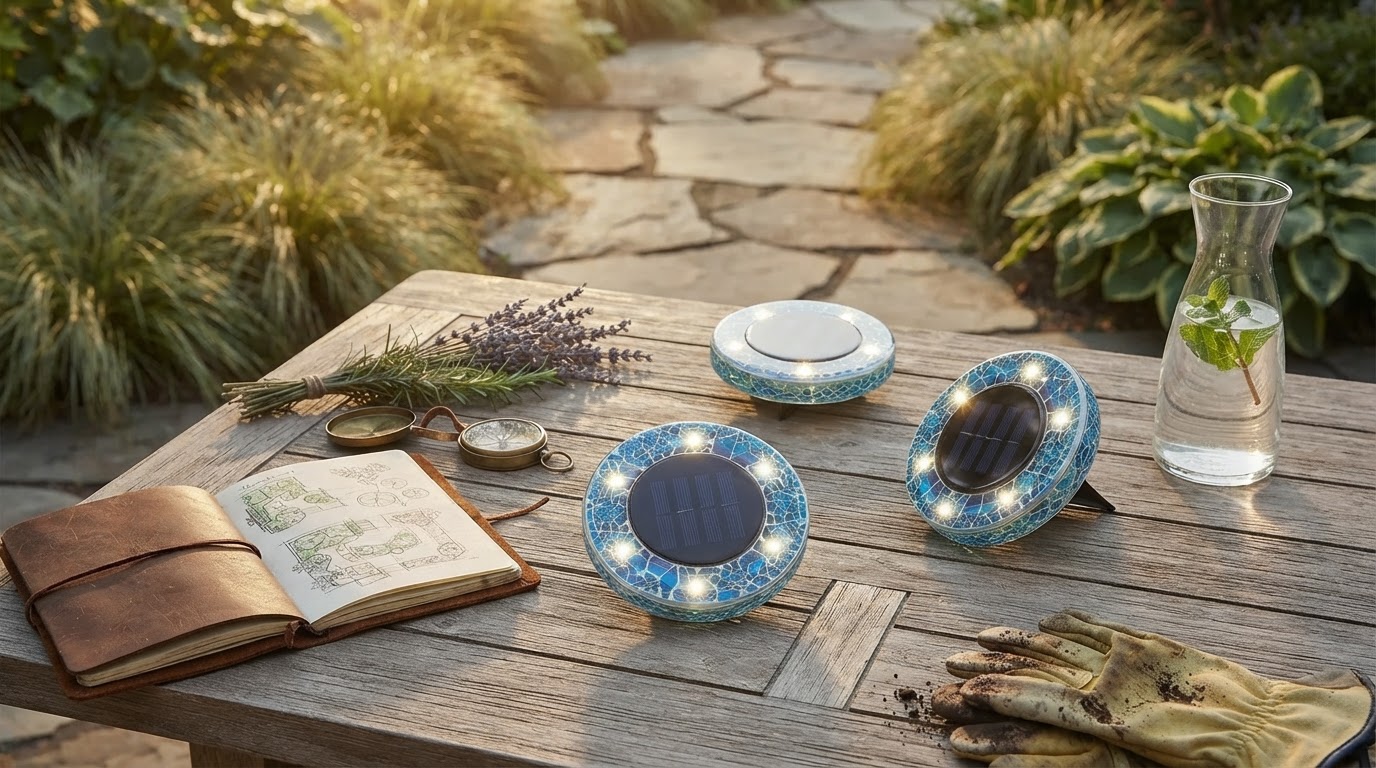
Solar Mosaic Disk Lights address the durability gap by utilizing a reinforced housing that protects the internal photovoltaic cell and LED array. Unlike standard plastic ground lights, these units incorporate stained glass fragments embedded in a weather-resistant substrate, which provides both protection and light refraction. The mosaic glass solar garden lights design isn't merely decorative; the fragmented glass surface serves to diffuse light across a wider horizontal plane, reducing the harsh glare often associated with clear-lens LEDs. Current market data from Tractor Supply Co. indicates a growing consumer preference for color-changing solar path lights, yet few options offer the structural reinforcement found in disk models. Run the math: a set of colorful mosaic solar path lights that survives three winter seasons is objectively more cost-effective than a cheaper stake-based alternative that requires annual replacement. These disk lights utilize a multi-point ground anchor system that prevents shifting during soil expansion and contraction. The integration of outdoor solar disk lights for yard use-cases ensures that the light remains functional even in areas where traditional stakes would be knocked over. Furthermore, the use of mosaic walkway lights solar powered systems allows for a flush-mount appearance that complements modern hardscaping without the trip hazards associated with taller fixtures. The technical advantage lies in the combination of a low-profile form factor and the protective qualities of the mosaic glass, which shields the solar panel from direct impact while maintaining a high level of light transmission.
Technical Criteria for Landscape Integration
Selecting a lighting system requires a rigorous framework that moves beyond simple visual appeal. When evaluating led mosaic solar landscape lighting for a specific site, the focus must remain on the intersection of light duration and material density. The following checklist provides the necessary parameters for determining if Solar Mosaic Disk Lights are suitable for a given environment:
- Solar Conversion Efficiency: The photovoltaic panel must be sized appropriately for the surface area of the disk to ensure a full charge within 6-8 hours of direct sunlight.
- Material Density: Verify that the mosaic fragments are securely bonded to prevent water ingress, which is the primary cause of internal short-circuiting in stained glass solar ground lights.
- Ingress Protection (IP) Rating: Ensure the unit is rated for at least IP65 to withstand heavy rain and irrigation systems common in residential yards.
- Impact Resistance: The disk must be capable of sustaining incidental contact from foot traffic or small garden equipment without cracking the mosaic surface.
- Light Diffusion Pattern: The refractive properties of the glass should provide a minimum 360-degree horizontal spread to effectively illuminate the walking surface.
Shop Solar Mosaic Disk Lights here