How do Solar Mosaic Disk Lights work in garden paths?
 Sam VasquezBuying Guide Lead
August 3, 2026 — Solar Mosaic Disk Lights operate through a self-contained photovoltaic system that converts sunlight into stored electrical energy to power integrated LEDs after sunset.
Homeowners often ask this because they want to know if these decorative fixtures can actually light a walkway or if they are just for show. Understanding the mechanics helps in placing the units for maximum runtime and longevity. The process relies on a delicate balance between light absorption and battery capacity.
How does the charging process function in Solar Mosaic Disk Lights?
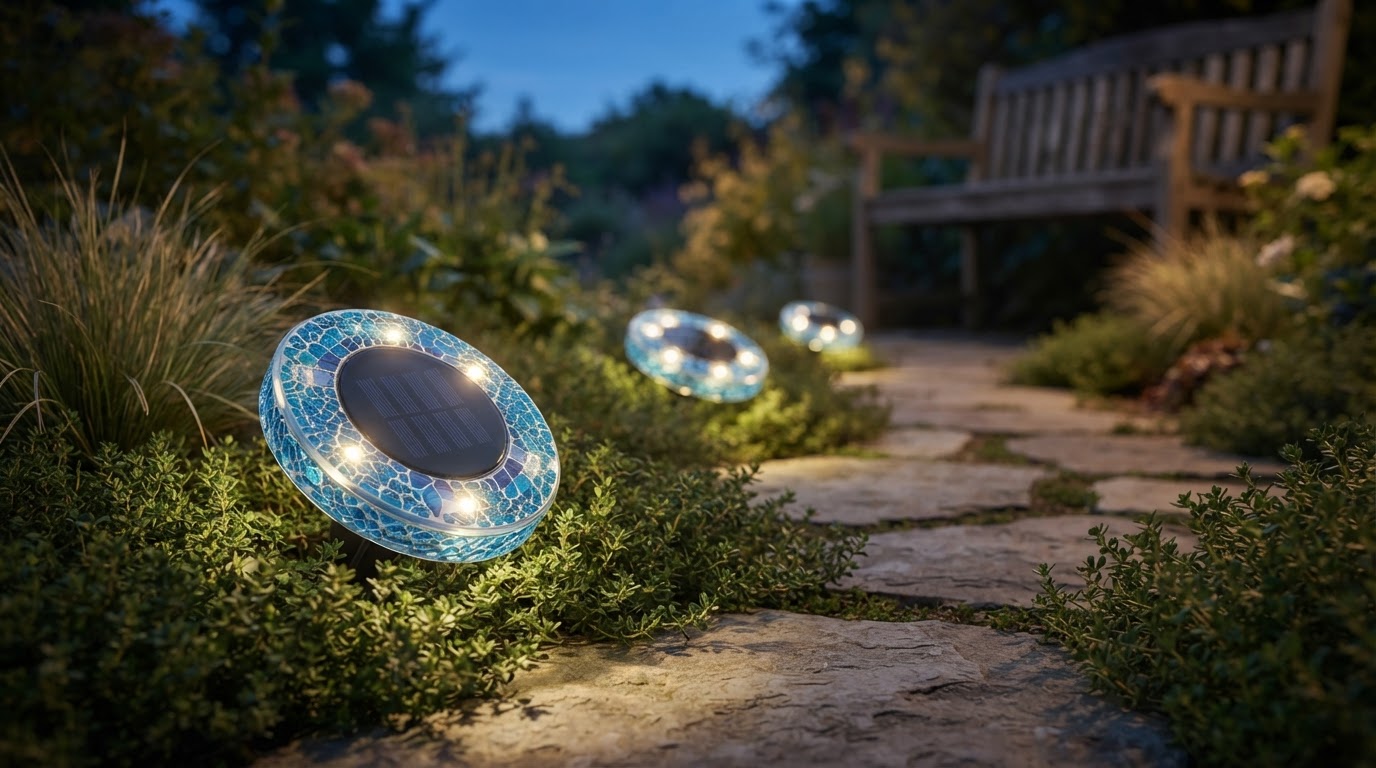
The charging process works by using a small photovoltaic cell to capture solar radiation and convert it into a direct current that fills an internal rechargeable battery. According to LawnStarter, these landscape lights house solar panels that the sun heats to convert into electricity. In the case of Solar Mosaic Disk Lights, these panels are typically integrated into the center of the disk, surrounded by stained glass fragments.
I have found that the efficiency of this process depends entirely on placement. If you tuck these under a thick shrub, the battery won't reach a full charge, leading to dim performance by midnight. Chris Loves Julia notes that for best results, you must place solar lights where they receive direct sunlight to charge the internal battery effectively during the day. Between a standard plastic stake light and a mosaic disk, I’d go with the disk for durability, but you have to keep that top glass surface clean of dirt and debris so the panel can see the sky.
How do these lights know when to turn on at night?

Photo by Artūras Kokorevas on Pexels
Solar Mosaic Disk Lights utilize a built-in photoresistor or light sensor that detects the drop in ambient light levels to trigger the battery to power the LEDs. This eliminates the need for manual switches or external timers, making them a set-it-and-forget-it solution for garden paths. Fonroche Solar Lighting explains that each light captures sunlight during the day and stores that energy in robust batteries to power nighttime lighting without relying on the electrical grid.
Here’s what I’d actually buy: the 4-pack or 8-pack sets that use NiMH batteries, as they tend to handle the heat of a summer sidewalk better than cheaper alternatives. The mosaic glass acts as a natural diffuser, which means the light isn't a harsh beam but a soft, colorful glow. If you're on a budget, you might be tempted by the cheapest plastic models, but the glass housing on these disks resists UV yellowing much longer. Skip this if your walkway is entirely covered by a permanent awning or deep porch, as the sensor won't distinguish between day and night correctly, and the battery will eventually fail from lack of use.
Quick answers
Q: How many hours of light do Solar Mosaic Disk Lights provide? / A: When fully charged by 6 to 8 hours of direct sunlight, most high-quality mosaic disks will stay illuminated for approximately 8 to 10 hours. Cloudy days will significantly reduce this duration to about 3 or 4 hours.
Q: Can these lights survive rain and snow? / A: Yes, Solar Mosaic Disk Lights are typically rated IP44 or IP65 for weather resistance, meaning the internal circuitry is protected against moisture and dust. The glass mosaic is grouted to prevent water from pooling on the solar cell.
Q: Do I need to replace the bulbs in my solar disk lights? / A: No, these units use integrated LEDs which are rated for roughly 20,000 to 50,000 hours of use. You will likely need to replace the rechargeable battery every 12 to 24 months before the LED itself fails.
Learn more about Solar Mosaic Disk Lights at https://solarmosaicdisklights.com.
Sources

Photo by Kim Lawrie on Pexels
- The Best Solar Path Lights of 2026: Tested To Find the Perfect Glow
- The Pros and Cons of Solar Landscape Lights - LawnStarter
- How to Assemble a Solar light & How they work. Pathway ... - YouTube