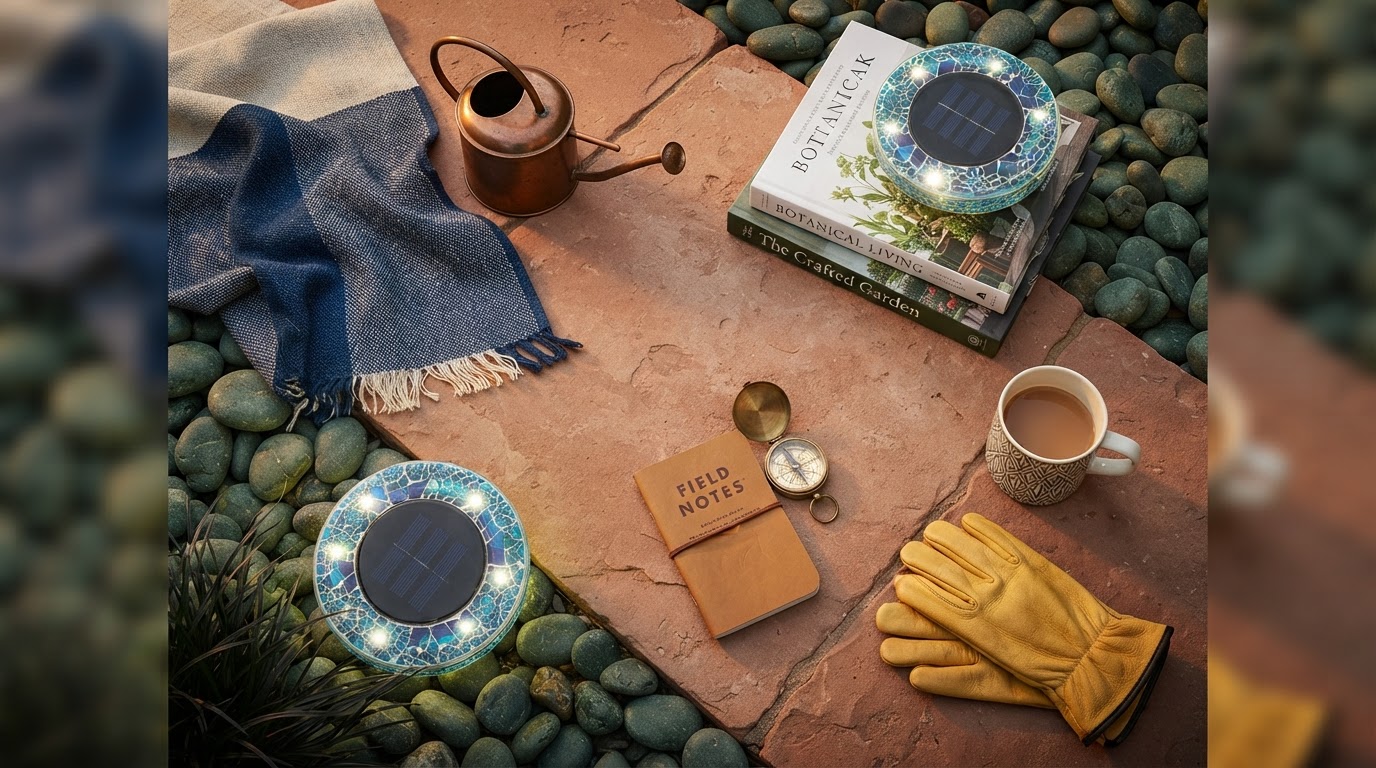
Enhancing Safety with Solar Mosaic Disk Lights
 Priya RamanSenior Analyst
October 26, 2026. This analysis explores the functional integration of Solar Mosaic Disk Lights into residential landscapes to solve visibility gaps. It is intended for homeowners seeking to balance aesthetic stained-glass elements with the technical requirements of ground-level illumination.
To evaluate these fixtures, think of it as a matrix of durability and light diffusion. Selecting the right outdoor lighting requires balancing the structural integrity of the housing against the specific light-refraction patterns created by mosaic glass. While standard LEDs provide a harsh, directional beam, Solar Mosaic Disk Lights utilize a multi-faceted surface to scatter light across a wider surface area, reducing the glare that often leads to temporary night blindness on dark walkways.
The Challenge of Low-Light Navigation
Residential landscapes often suffer from "black holes"—areas between traditional floodlights where depth perception fails. Traditional pathway lighting frequently relies on elevated stakes that are susceptible to damage from lawn equipment or heavy foot traffic. According to The Spruce, which tested and reviewed the 9 best solar pathway lights, the most effective models must provide enough illumination to guide the way without overwhelming the space with excessive brightness. The specific challenge with traditional designs is their profile; high-profile stakes often break at the neck, leaving wires exposed or creating tripping hazards.
Furthermore, the aesthetic limitations of standard plastic solar lights often clash with curated garden designs. Consumers frequently search for outdoor mosaic ground lights solar to find a solution that looks as intentional during the day as it does at night. The problem is exacerbated by weather conditions. Standard solar units often lack the sealing required to prevent moisture ingress in the glass housing, leading to the clouding of the solar cell. By moving toward in-ground solar mosaic disk lights, users can mitigate the physical risks of protruding fixtures while benefiting from the diffused glow of stained glass. This shift addresses both the mechanical failure of tall stakes and the visual harshness of unshielded LED bulbs.
Technical Advantages of Mosaic Disk Architecture
The architecture of Solar Mosaic Disk Lights represents a departure from vertical stake lighting. By utilizing a flat-profile disk, these units sit nearly flush with the ground, which protects the internal components from lateral force. The use of glass mosaic solar ground lights ensures that the light emitted is not just a single point of brightness but a textured wash of color that defines the edges of a path more effectively than a clear lens. This is particularly relevant when considering led mosaic solar landscape lighting, where the goal is to create a continuous visual boundary rather than a series of disconnected hotspots.
Two axes matter here: the efficiency of the photovoltaic conversion and the refractive index of the mosaic glass. Solar Mosaic Disk Lights are typically designed as 4-pack or larger configurations to ensure consistent spacing. The internal LED is positioned beneath a layer of hand-placed glass shards, which serve as a natural diffuser. This design allows the light to remain visible from a distance—a common search query for those looking for mosaic solar garden lights—without the blinding effect of an exposed diode. Additionally, the waterproof mosaic solar pathway lights construction found in these disk models often utilizes a reinforced resin or stainless steel base to house the rechargeable battery, providing a lower center of gravity and better resistance to soil moisture than their top-heavy counterparts. When integrated with solar powered mosaic landscape lighting, these disks provide a foundational layer of light that complements taller decorative elements.
Selection Framework for Outdoor Mosaic Lighting
Once you see it this way, the choice between different solar models becomes a matter of technical alignment with your specific terrain. The decision rule: prioritize disk-based mosaic lights for high-traffic zones where flush mounting prevents damage, and reserve stake-based mosaic lights for deep garden beds where elevation is needed to clear foliage. For those focusing on in-ground solar mosaic disk lights, the focus should remain on the seal quality and the density of the mosaic pattern. As noted in various community discussions on Pinterest regarding mosaic solar lights, the most durable units are those that use a weather-resistant grout between the glass pieces to prevent water from pooling.
When finalizing a purchase, use the following checklist to ensure the product meets long-term performance standards:
- Verify the IP (Ingress Protection) rating to ensure the disk is rated for ground-level water exposure.
- Check for a stainless steel or heavy-duty ABS plastic rim to protect the glass edges from lawnmower strikes.
- Assess the color temperature of the LED; warm white typically enhances the colors of the mosaic glass more effectively than cool white.
- Ensure the solar panel is integrated directly into the disk surface rather than requiring an external wire.
- Confirm the inclusion of ground spikes that are detachable, allowing for flat placement on stone patios or decks.
Shop Solar Mosaic Disk Lights here
Sources
- Mosaic Solar Lights - Pinterest
- Mosaic Solar Garden Lights - eBay
- Love these solar mosaic lights. Perfect for tabletops too! Choose from a ...