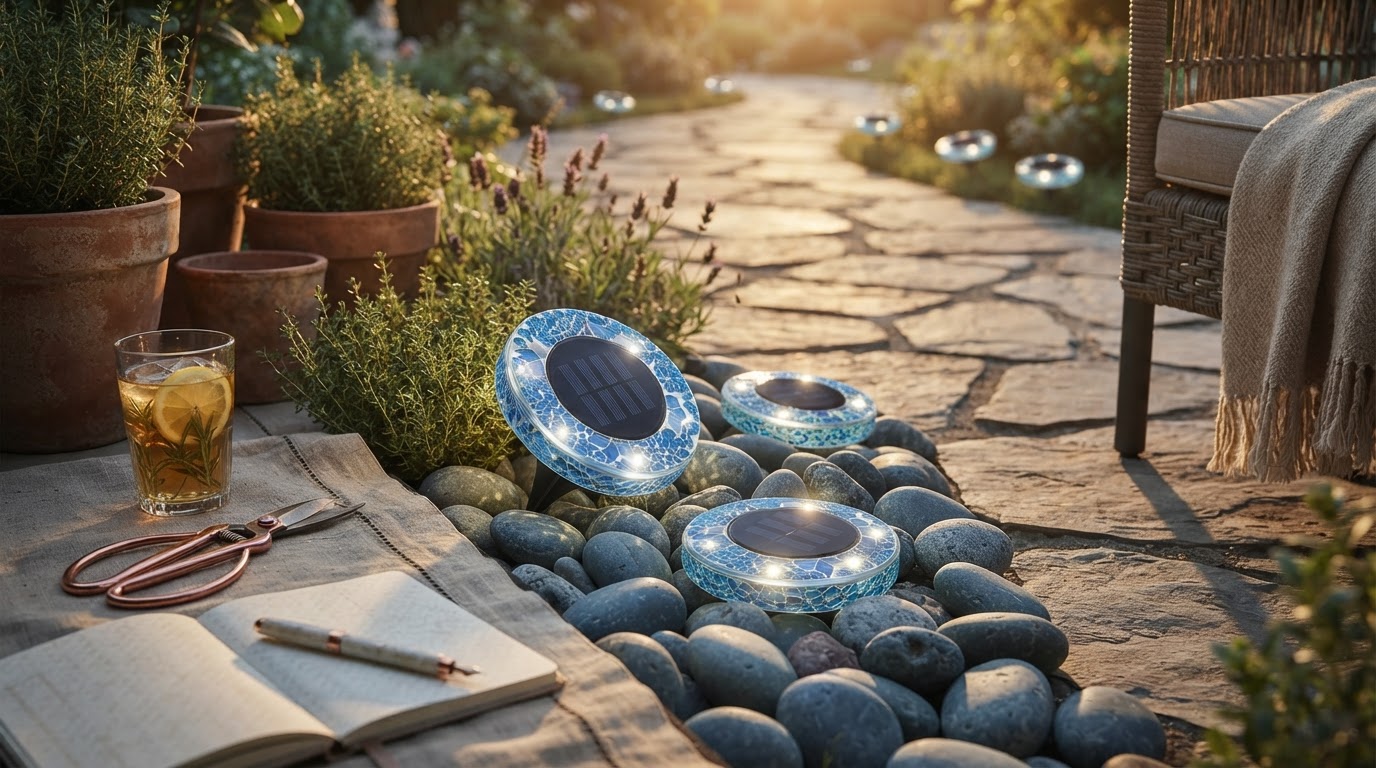
Enhancing Patio Ambiance with Solar Mosaic Disk Lights
 Priya RamanSenior Analyst
August 2, 2026. This analysis examines the technical and aesthetic integration of mosaic-textured lighting within modern residential patios. It is intended for homeowners seeking to balance functional walkway safety with high-impact visual design.
To evaluate these fixtures effectively, think of it as a matrix of utility and ornamentation. When planning a patio layout, two axes matter here: the physical footprint of the light source and the refractive quality of the casing. Traditional landscape lighting often focuses exclusively on lumens per watt, neglecting the emotional resonance of the space. By introducing Solar Mosaic Disk Lights, the design shifts from a purely utilitarian approach to one that prioritizes visual texture. According to Pinterest, mosaic solar lights are increasingly utilized in DIY solar light crafts to brighten yards and gardens, emphasizing a trend toward personalized, artistic outdoor environments. This shift indicates that consumers are no longer satisfied with standard white LEDs; they require fixtures that serve as decorative elements during daylight hours while providing reliable illumination at night. The decision rule for patio integration depends on whether the lighting serves as a primary path marker or a secondary atmospheric layer, a distinction that dictates the density of placement.
Solar Mosaic Disk Lights address these requirements by utilizing a low-profile, ground-integrated form factor that minimizes trip hazards while maximizing light dispersion. These fixtures typically feature stained glass or mosaic glass overlays that fragment the LED output into intricate patterns, a stark contrast to the flat beam of standard disk lights. In the context of colorful mosaic patio lighting, the use of varied glass shards allows for a spectrum of hues that can complement existing outdoor furniture or garden flora. The hardware is designed for resilience, often appearing in search queries as waterproof mosaic solar pathway lights, reflecting a consumer demand for durability against irrigation and rain. Unlike stake-mounted lights that can be easily displaced by wind or lawn equipment, the disk format sits flush or nearly flush with the ground, making them ideal for high-traffic areas like patio perimeters and walkways. This stability is critical for maintaining a consistent design language across a larger landscape project, especially when blending these units with broader boho outdoor solar lighting ideas that favor organic, textured materials over cold plastics. The technical efficiency of the solar cells integrated into the disk surface ensures that even with the decorative mosaic overlay, the battery charges sufficiently to provide 6 to 10 hours of illumination, depending on daily sun exposure.
Selecting the appropriate mosaic lighting requires a structured decision framework to ensure the hardware matches the environmental demands. Once you see it this way, the process of choosing between various models—such as the mosaic solar disk lights 4 pack or individual decorative solar ground lights—becomes a matter of spatial geometry rather than guesswork. The decision rule for purchasing should be based on the specific light-to-shadow ratio desired for the patio surface. A higher density of LED mosaic solar landscape lighting will create a continuous wash of color, whereas staggered placement creates distinct pools of light that emphasize the texture of the ground material, whether it be stone, wood, or pavers. Before finalizing a purchase, consumers should verify the following specifications:
- Ingress Protection (IP) rating to ensure the unit is rated for outdoor, wet-weather environments.
- Disk diameter and height to confirm the light will sit flush with the intended surface.
- Solar panel surface area relative to the number of LEDs to ensure longevity of the nightly cycle.
- Glass bonding quality, particularly in mosaic garden disk lights solar powered models, to prevent shard displacement over time.
- Color temperature of the underlying LED, which affects how the mosaic colors are perceived after dark.
Shop Solar Mosaic Disk Lights here
Sources

Photo by Unggul Budi on Pexels