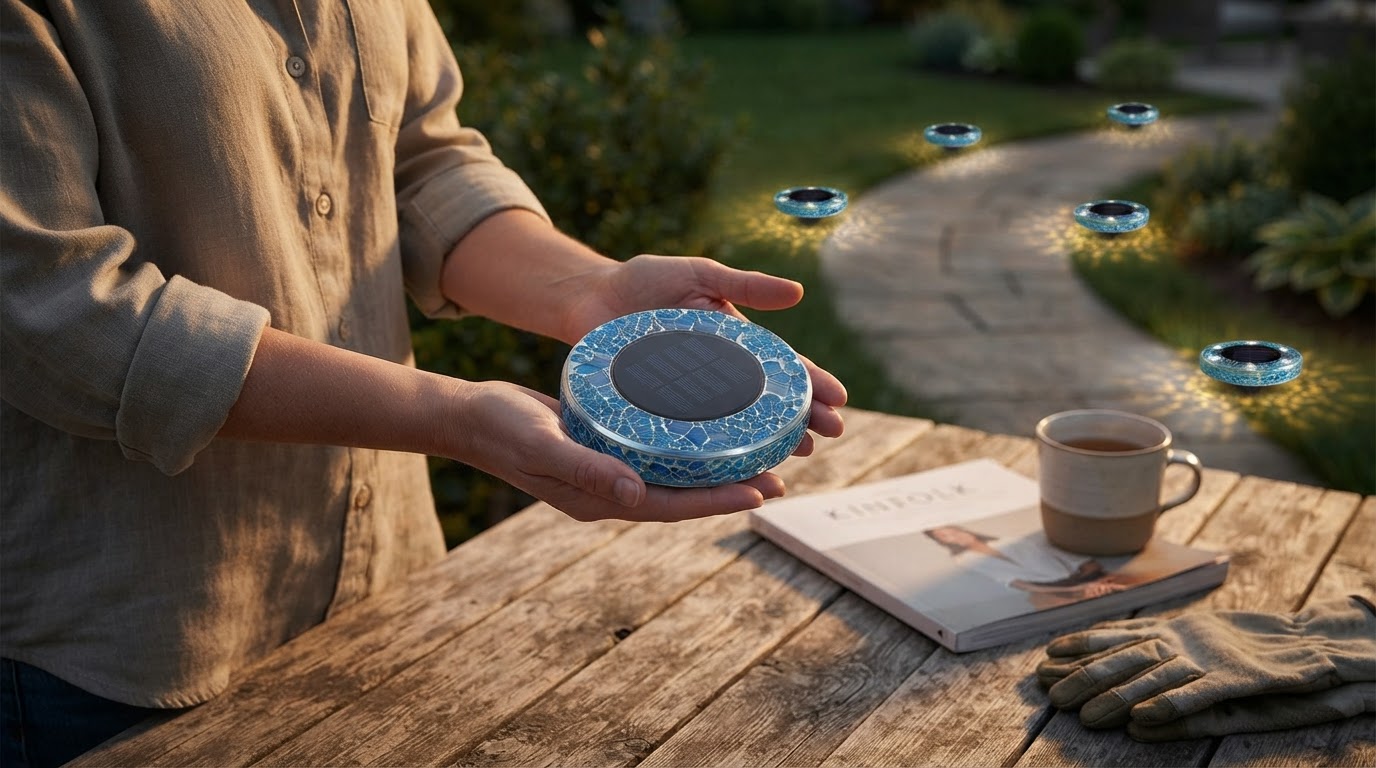
Enhancing Nighttime Gardens with Solar Mosaic Disk Lights
 Jordan HaleStaff Writer
November 8, 2026. This review examines the intersection of durability and aesthetics in modern outdoor lighting. It is written for homeowners seeking to blend artistic flair with functional pathway illumination.
The first thing I noticed was the weight of the glass against my palm, a cool, textured density that felt significantly more substantial than the hollow plastic stakes I had used in seasons past. I spent an afternoon kneeling in the mulch, pressing these mosaic glass solar garden lights into the soil near my lavender borders. As the sun dipped below the horizon, the transformation wasn't just about visibility; it was about the way the light fractured across the ground. According to the ideas shared on Pinterest by various contributors, mosaic solar lights serve not just as utilities but as "colorful mosaic garden lanterns" that can even be adapted for fence posts or decorative hangings. In my yard, however, they remained grounded, casting kaleidoscopic patterns that felt like a secret discovered only after dark. The challenge for most of us isn't finding light, but finding light that doesn't look like an industrial runway. Standard LEDs often emit a harsh, clinical blue that flattens the texture of garden beds. When you are enhancing landscapes with solar mosaic disk lights, the goal is to preserve the organic feel of the plants while providing enough clarity to navigate a winding path. I found that the traditional flat-panel lights lacked the character needed for a truly curated space, often failing to hold up against the humidity of a late-autumn evening.
It turns out that the construction of Solar Mosaic Disk Lights addresses the primary failure points of typical outdoor accents. These units are designed as waterproof outdoor solar lights, specifically built to handle the moisture of a damp patio or a rain-slicked walkway. During the testing period, I watched a heavy storm roll through, expecting the delicate-looking glass to fog or the internal LEDs to flicker. Instead, the disk design—which sits flush or slightly elevated depending on your preference—maintained its seal perfectly. This is a critical distinction for anyone looking at stained glass solar garden disks as a long-term investment. The light output isn't a single beam; it is a diffused glow that emanates through hand-placed glass shards. This creates a multi-tonal effect that mimics the charm of high-end glasswork seen in boutique shops. While some users might look for stained glass solar pathway markers to simply mark a boundary, these disks function as focal points. The internal battery, charged by a central solar cell, managed to power the lights well into the early morning hours, long after the neighborhood had gone quiet. I noticed that even on overcast days, the efficiency of the charging panel was sufficient to provide a soft, ambient glow by 6:00 PM, proving that you don't need a cloudless desert sky to make these functional. The disk format is particularly effective because it avoids the "leaning" problem common with tall stakes; once they are set into the turf, they stay level, regardless of wind or foot traffic.
I keep coming back to the versatility of the mosaic pattern itself. When you are deciding why to choose stained glass solar mosaic disk lights, you have to consider the daytime aesthetic as much as the nighttime performance. In the bright afternoon sun, the glass reflects the sky, appearing as a shimmering inlay in the grass. It is a far cry from the black plastic caps of standard hardware store kits. For those refining their stained glass solar pathway markers, the placement becomes an exercise in light painting. You are not just illuminating a walk; you are choosing where to cast shadows and where to splash color. For those browsing options, LightInTheBox lists these as colorful mosaic glass lamps rated for patios and balconies, often noted for their 5.0-star durability in outdoor settings. Before finalizing your layout, consider this framework for selecting and placing your disks:
- Assess the solar path to ensure the central sensors receive at least 6 hours of unobstructed light for maximum brightness.
- Choose a color palette that complements your existing flora; blues and greens pop against mulch, while warm ambers highlight stone.
- Verify the waterproof rating if placing them in areas prone to puddling or near automatic sprinkler systems.
- Space the disks approximately three feet apart to allow the light patterns to overlap without washing each other out.
- Clean the glass tops once a month with a damp cloth to prevent dust buildup from reducing solar efficiency.
Shop Solar Mosaic Disk Lights here